
baler
baler: A technical guide
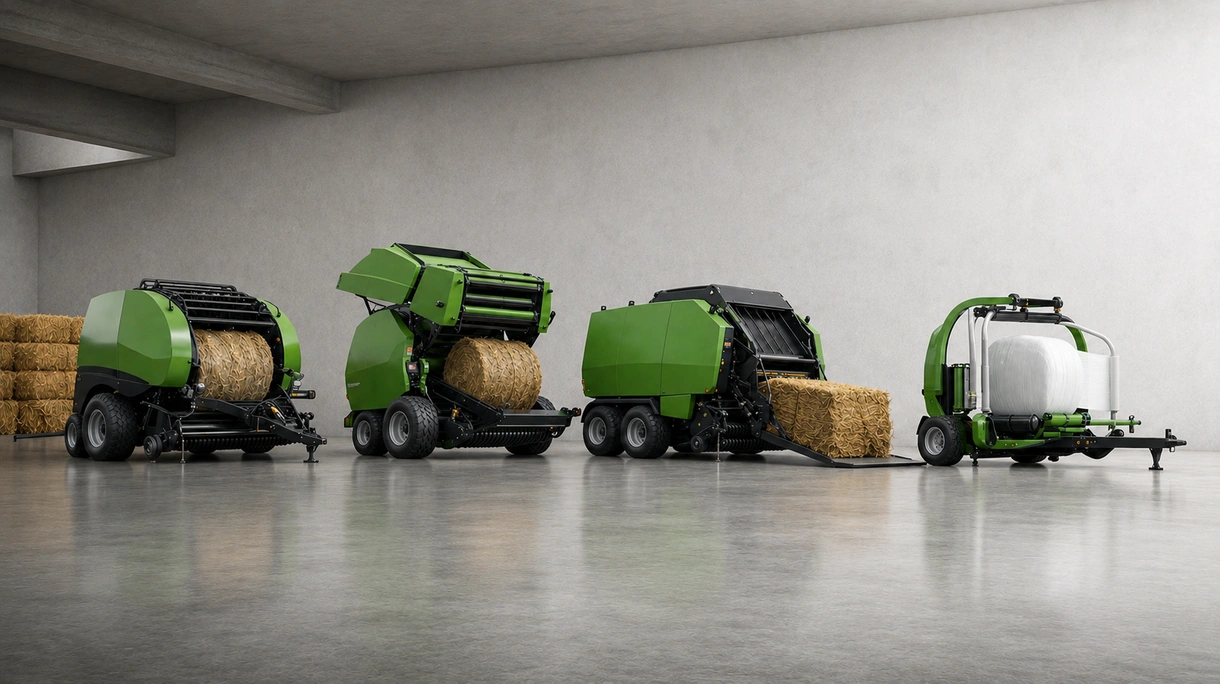
4 Criteria to choose your baler
Throughput and Density Capacity
High-density compression ensures fewer bales to transport, reducing logistics costs and storage footprint while maintaining forage quality.
Bale Shape and Dimensions
Choosing between round or square formats dictates handling equipment compatibility, storage efficiency, and marketability for resale purposes.
Pick-up Width and Feeding
Optimal intake width ensures clean collection of wide swaths, maximizing field speed and preventing crop loss during harvest.
Binding System Reliability
Precision knotters or net-wrap systems prevent field failures, ensuring structural integrity during transport and long-term storage stability.
Available technologies and advantages
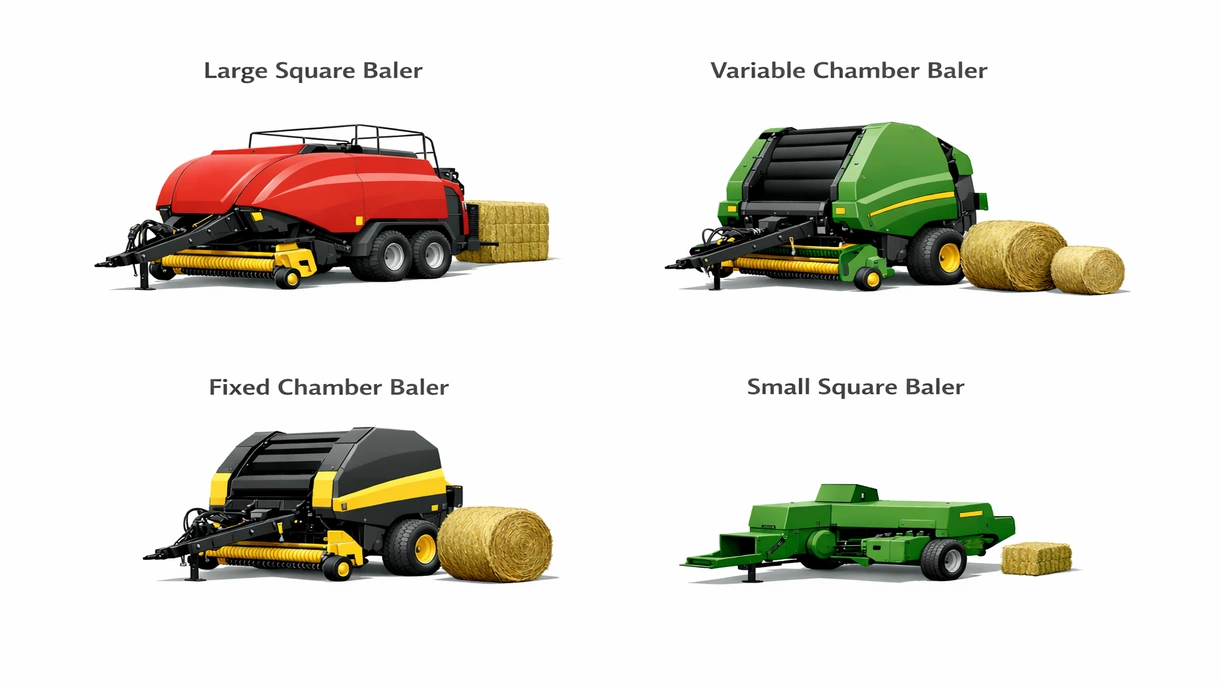
Large Square Balers
optimize transport density but demand massive tractor power. The operational trade-off prioritizes logistical savings over high initial capital expenditure and complex mechanical maintenance requirements.
Variable Chamber Balers
offer adjustable bale sizes for diverse needs. While flexible, belt maintenance is a limitation compared to rollers, balancing versatile diameter control against increased wear risks.
Fixed Chamber Balers
excel in wet silage due to robust roller designs. They lack diameter flexibility and high density, trading off uniform size for superior performance in high-moisture conditions.
Small Square Balers
suit manual handling and boutique hay markets. Their limitation is low field throughput, trading off high labor requirements for premium pricing in the equine and hobby sectors.
6 expert tips
Prioritize high-density square balers to maximize truckload capacity and reduce long-distance transport costs for commercial hay operations.
Select variable chamber models if your operation requires flexibility to produce different bale sizes for diverse livestock needs.
Evaluate the integration of moisture sensors to prevent spontaneous combustion risks and ensure high-quality forage preservation during storage.
Assess the availability of local dealer support and parts inventory to minimize downtime during critical short harvest windows.
Invest in ISOBUS compatible systems to automate tractor speed and optimize feeding rates for consistent bale shape results.
Always verify the technical certification to ensure compliance with local building safety standards and long-term durability.
Innovations and Trends
Tractor Implement Management synchronizes speed and baling cycles to reduce operator fatigue and increase hourly throughput significantly.
Near-infrared sensors measure crude protein and moisture content during baling, allowing for precise crop valuation and sorting.
Biodegradable twine and film options address European environmental regulations while reducing waste management costs for livestock producers.
Advanced feeding systems pre-compact material before the main plunger stroke, increasing density by twenty percent in heavy straw.
*Prices are pre-tax. They exclude delivery charges and customs duties and do not include additional charges for installation or activation options. Prices are indicative only and may vary by country, with changes to the cost of raw materials and exchange rates.
About AgriExpo
AgriExpo is a marketplace that offers B2B players a complete experience, from product sourcing to purchase. AgriExpo is an entity of VirtualExpo Group.
Are you a buyer?
Are you a supplier?