- Home page
- buying guide
- mower-conditioner
mower-conditioner
4 Criteria to choose your mower-conditioner
Optimizing leaf retention while maximizing moisture release ensures high-protein forage quality and significantly reduces dry-down time in fields.
Uniform windrow formation prevents harvesting bottlenecks and ensures consistent drying rates across variable terrain and differing forage densities.
High-strength steel components and modular disc protection reduce downtime during intensive harvest windows and lower long-term maintenance costs.
Advanced suspension systems maintain consistent cutting heights on uneven ground to prevent soil contamination and protect valuable regrowth.
Available technologies and advantages
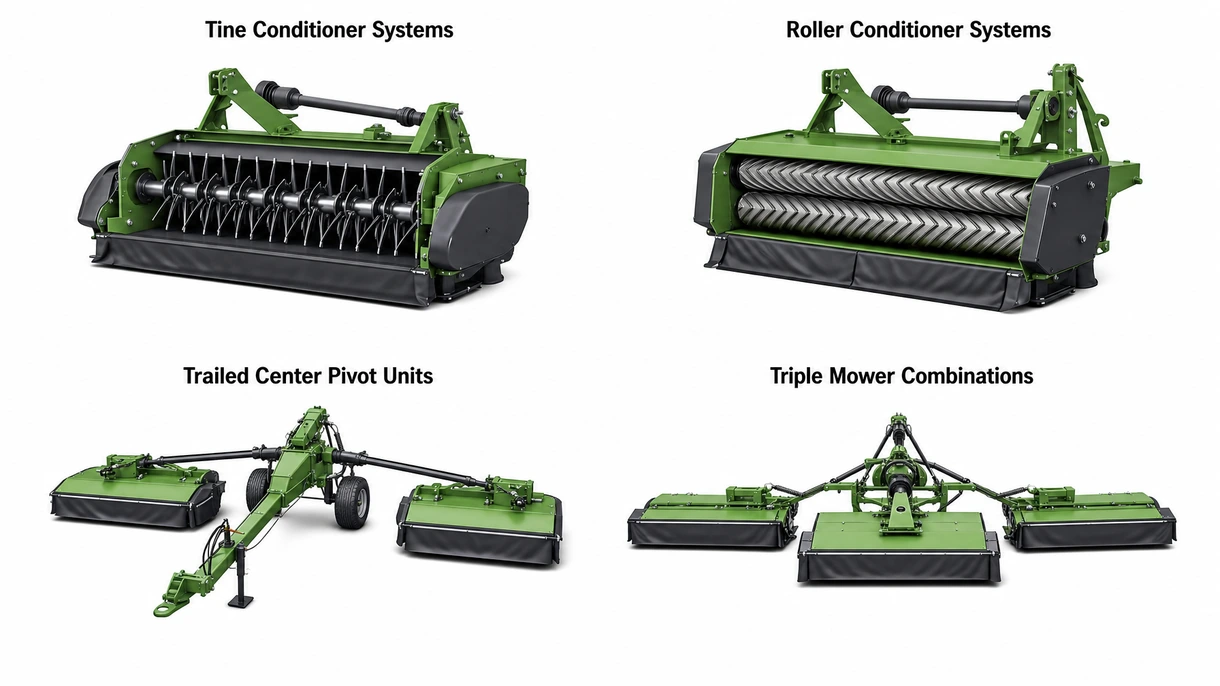
Advantages include high throughput in heavy grasses, but significant leaf loss in leguminous crops like alfalfa presents a major limitation for high-quality forage production.
Benefits center on superior nutrient preservation in alfalfa, though operational speeds are often lower compared to tine systems when working in thick, tangled grass.
Operational flexibility and reduced compaction are primary advantages, yet the increased mechanical complexity and higher purchase price necessitate a significant capital investment for operators.
High operational capacity and labor efficiency are major advantages, but these systems require high-horsepower tractors and involve substantial maintenance costs for multiple cutting bars.