
- Home page
- buying guide
- moisture analyzer
moisture analyzer
moisture analyzer: A technical guide
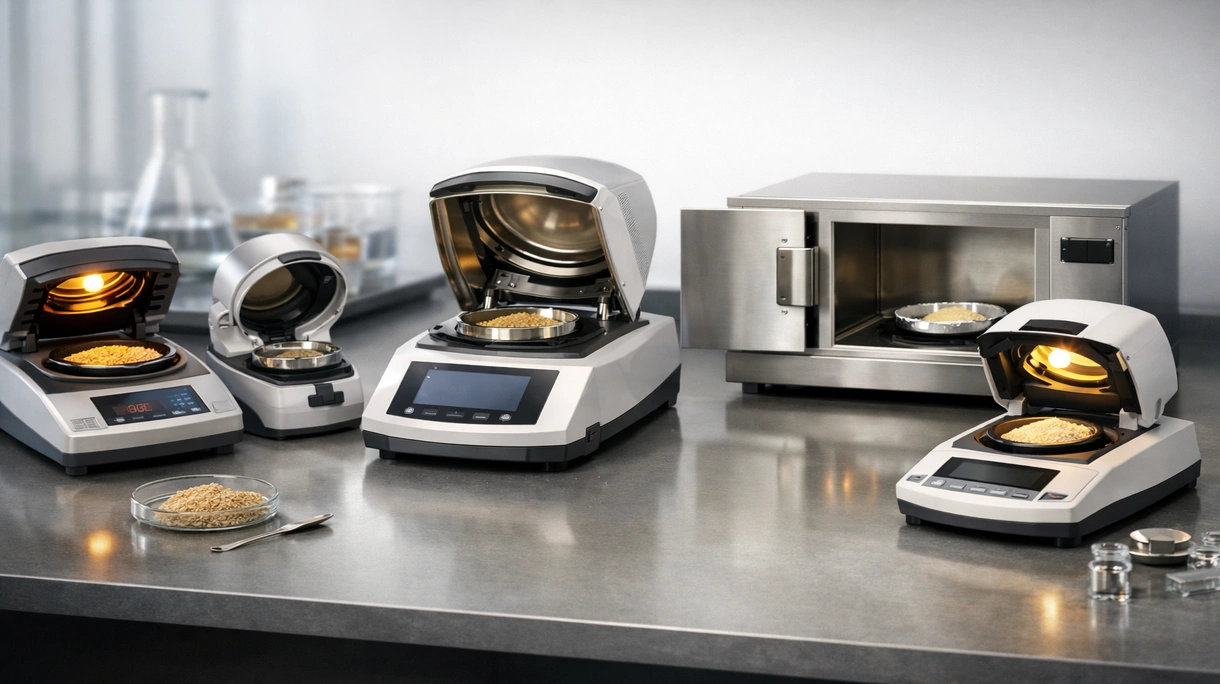
4 Criteria to choose your moisture analyzer
Measurement precision and repeatability
High accuracy ensures grain storage stability and prevents spoilage while maximizing price premiums through meeting strict commercial moisture specifications.
Field durability and portability
Robust housing and battery efficiency are vital for intensive on-combine testing during harvest peaks across diverse topographical farm conditions.
Multi-crop calibration versatility
Advanced libraries covering grains, oilseeds, and forage permit a single device to manage entire harvest cycles across varied agricultural operations.
Rapid analysis speed performance
Rapid results enable immediate logistical decisions regarding drying requirements or immediate sales, reducing equipment downtime during critical weather windows.
Available technologies and advantages
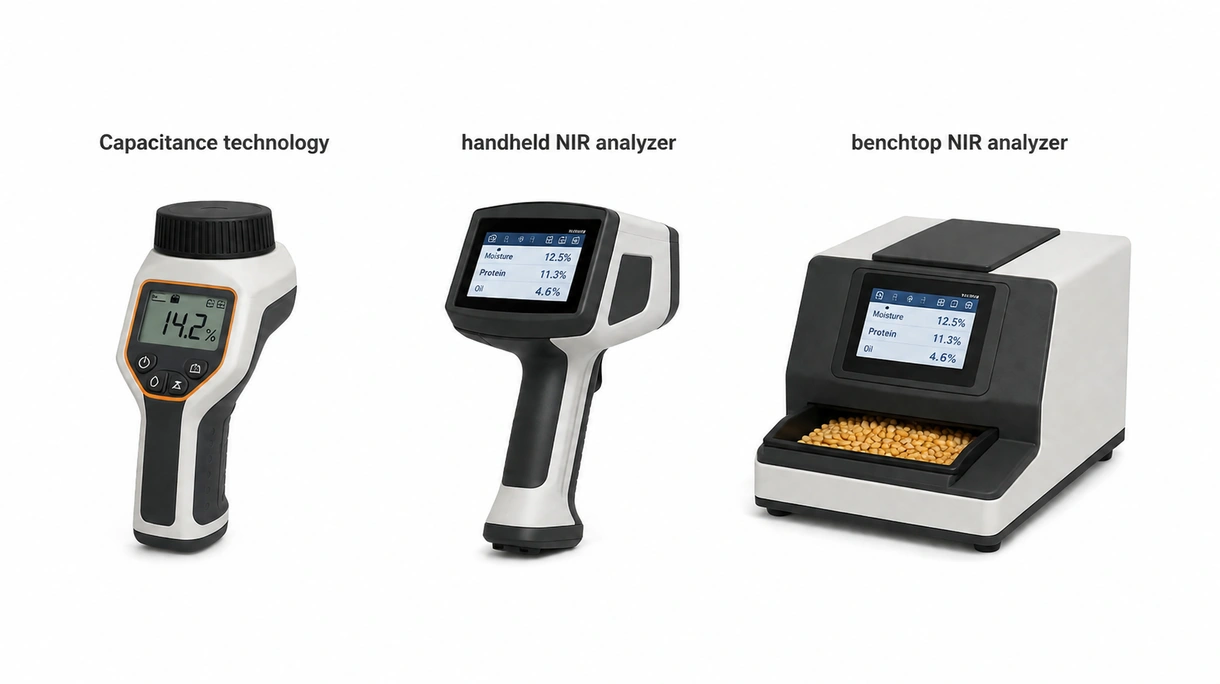
Capacitance technology
These dielectric units measure electrical property changes to estimate water content, providing quick results for most common cereal crops across diverse environments.
Operational considerations
Low costs and portable designs benefit field use, though precision declines with high moisture levels and temperature variability requires constant compensation.
Infrared spectroscopy
Near-infrared systems utilize light absorption spectra to quantify moisture, protein, and oil levels simultaneously across a wide range of agricultural samples.
Commercial trade-offs
These offer laboratory precision for multiple constituents but demand significant capital investment and rigorous, ongoing calibration to ensure consistent performance.
6 expert tips
Prioritize devices with automatic temperature compensation to ensure accurate readings regardless of ambient field heat or cold grain storage.
Select models featuring integrated data logging to facilitate traceability and seamless integration into digital farm management software platforms globally.
Invest in handheld units with crush-cell technology to achieve better consistency across unevenly dried grain samples during harvest peaks.
Evaluate the availability of local calibration services to maintain long-term measurement integrity and satisfy commercial trade regulatory standards effectively.
Choose analyzers with extensive pre-loaded crop libraries to avoid expensive future software upgrades when diversifying agricultural production or rotations.
Always verify the technical certification to ensure compliance with local building safety standards and long-term durability.
Innovations and Trends
Cloud-connected IoT sensors enable real-time monitoring of grain bins to prevent spoilage and optimize ventilation energy usage.
Smartphone-integrated handheld analyzers utilize mobile processing to offer low-cost laboratory-grade spectral analysis directly in remote agricultural fields.
In-line systems provide continuous moisture data streams to combine harvesters, allowing for instant and precise yield map adjustments.
Non-destructive microwave technology offers deeper sample penetration, improving accuracy for large-kernel crops and high-moisture silage.
*Prices are pre-tax. They exclude delivery charges and customs duties and do not include additional charges for installation or activation options. Prices are indicative only and may vary by country, with changes to the cost of raw materials and exchange rates.
About AgriExpo
AgriExpo is a marketplace that offers B2B players a complete experience, from product sourcing to purchase. AgriExpo is an entity of VirtualExpo Group.
Are you a buyer?
Are you a supplier?