
- Home page
- buying guide
- climate controller
climate controller
climate controller: A technical guide
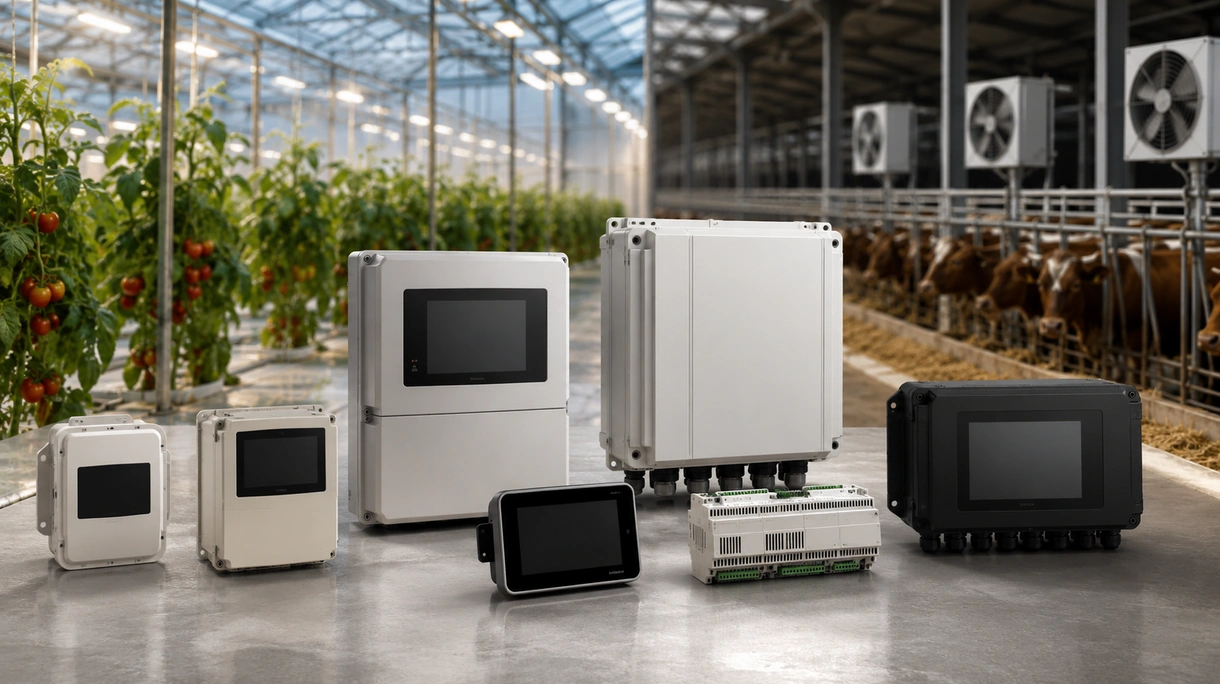
4 Criteria to choose your climate controller
Sensor Interoperability Protocols
Systems must integrate diverse analog and digital sensors across Modbus or SDI-12 to maintain precise environmental setpoints and data.
Multi-Zone Actuator Control
Controllers must manage independent ventilation, heating, and irrigation zones simultaneously to optimize microclimates within large-scale livestock or greenhouse facilities.
Fail-Safe Redundancy Systems
Emergency mechanical overrides and redundant power circuits prevent catastrophic livestock loss or crop spoilage during hardware or connectivity failures.
Remote Data Management
Real-time cloud synchronization allows managers to adjust parameters remotely and analyze historical trends for improved operational decision-making and reporting.
Available technologies and advantages
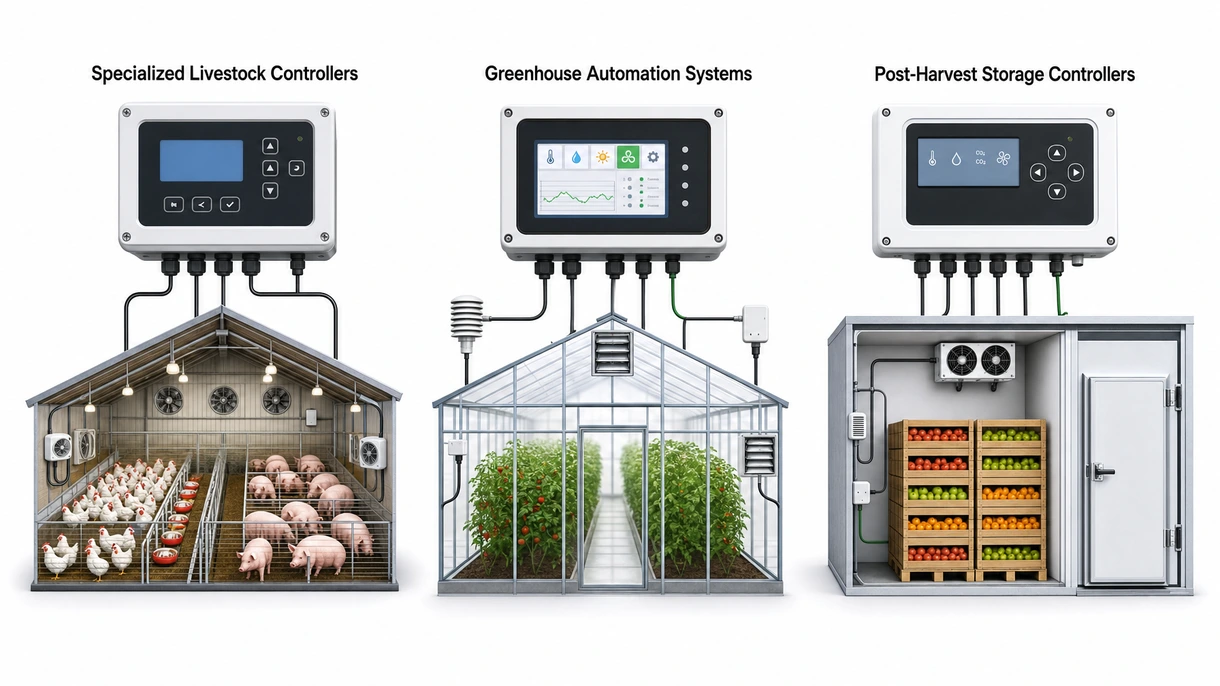
Specialized Livestock Controllers
Optimized for ammonia levels and humidity, these units prioritize animal welfare through high-volume ventilation staging and misting system coordination. Advantages include superior air quality and health monitoring. Limitations involve sensor degradation in corrosive barn environments, requiring frequent calibration trade-offs.
Greenhouse Automation Systems
These manage complex light-level integration with shading and CO2 enrichment, ensuring optimal photosynthetic rates for high-value horticultural crop production. Advantages include maximized yields and resource efficiency. Limitations involve high upfront capital costs and technical complexity for non-specialized farm labor.
Post-Harvest Storage Controllers
Engineered for bulk storage, these focus on precise temperature stability and moisture control to prevent fungal growth and maintain grain quality for months. Advantages include long-term crop preservation and loss reduction. Limitations involve slow response times which are unsuitable for active plant growth environments.
6 expert tips
Prioritize controllers featuring modular hardware architectures to ensure cost-effective scalability as your greenhouse or livestock facility footprint expands.
Select systems offering native integration with existing farm management software to eliminate manual data entry and streamline regulatory compliance.
Invest in units with high-ingress protection ratings to withstand high-pressure cleaning and corrosive environments typical of modern swine barns.
Evaluate the availability of local technical support and spare parts to minimize downtime during critical growth or storage phases.
Demand detailed energy consumption analytics within the interface to identify efficiency gains and reduce high utility costs during peak periods.
Always verify the technical certification to ensure compliance with local building safety standards and long-term durability.
Innovations and Trends
Uses machine learning to anticipate weather changes, reducing heating energy consumption by twenty percent in greenhouses.
Enable low-power long-range monitoring of distant microclimates without the high installation costs of traditional copper wiring.
Processes critical environmental data locally to ensure zero-latency response times even during total internet connectivity outages.
Optimize gas levels based on real-time light intensity, meeting new European sustainability standards for efficiency.
*Prices are pre-tax. They exclude delivery charges and customs duties and do not include additional charges for installation or activation options. Prices are indicative only and may vary by country, with changes to the cost of raw materials and exchange rates.
About AgriExpo
AgriExpo is a marketplace that offers B2B players a complete experience, from product sourcing to purchase. AgriExpo is an entity of VirtualExpo Group.
Are you a buyer?
Are you a supplier?