
- Home page
- buying guide
- mounted fertilizer spreader
mounted fertilizer spreader
mounted fertilizer spreader: A technical guide
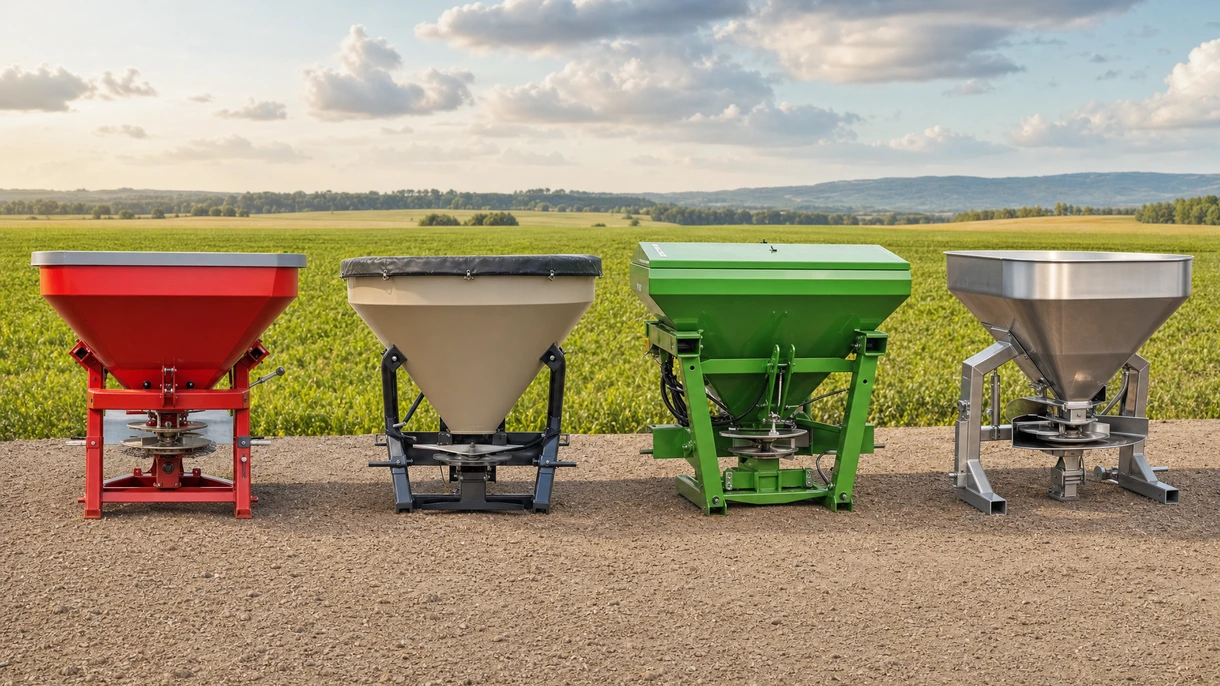
4 Criteria to choose your mounted fertilizer spreader
Flow Control Accuracy
Precision metering systems ensure uniform nutrient application across varying ground speeds to maximize crop yield while minimizing input waste.
Working Width Stability
Disc design and vane geometry must maintain consistent spread patterns even in windy conditions or during high-speed field operations.
Corrosion Resistance Quality
Stainless steel components and high-grade powder coating are essential to withstand the highly abrasive and corrosive nature of fertilizers.
Hopper Capacity Balance
Weight distribution must match tractor lift capacity to ensure safe road transport and field stability without compromising soil compaction.
Available technologies and advantages
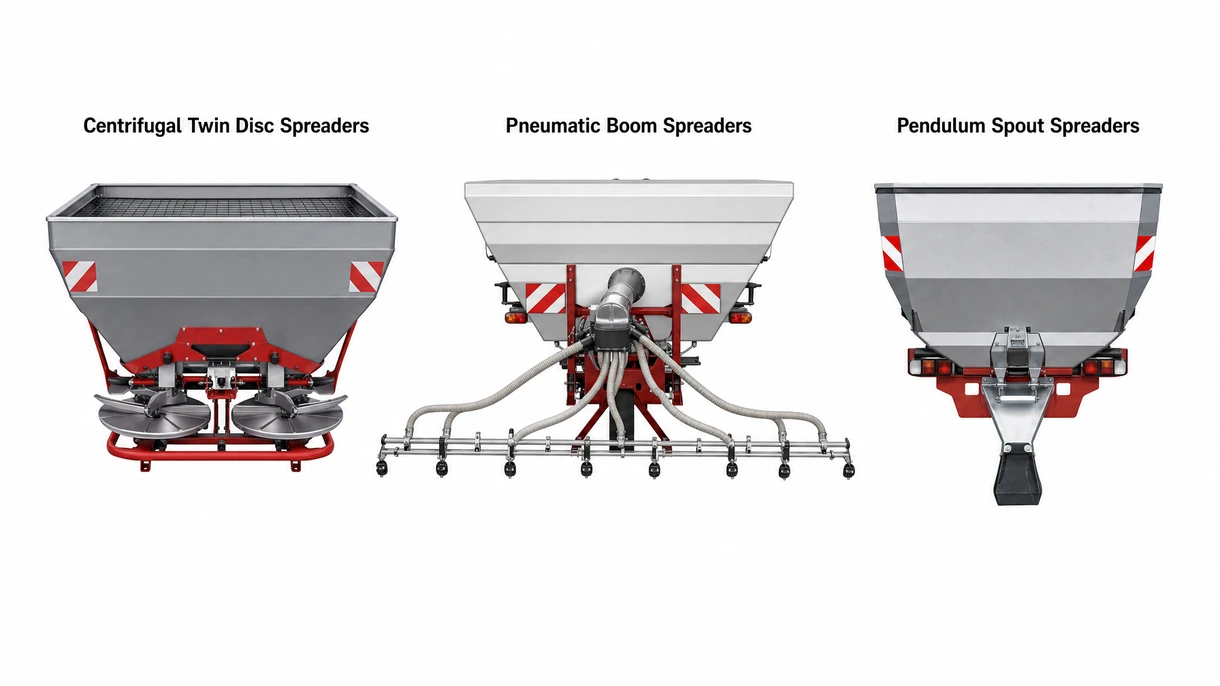
Centrifugal Twin Disc Spreaders
These systems utilize rotating discs with adjustable vanes to throw granules over wide areas. They offer high productivity and versatility for diverse granulated materials across varied working widths. Advantages include high speed and wide coverage. Limitations involve sensitivity to wind and granule quality, requiring frequent calibration to maintain pattern symmetry.
Pneumatic Boom Spreaders
These machines transport fertilizer via air streams through tubes to individual outlets along a boom. This ensures precise placement regardless of granule weight or weather conditions. Advantages include unmatched accuracy and reduced overlap. Limitations are higher mechanical complexity, increased maintenance requirements, and limited working widths compared to high-end disc systems.
Pendulum Spout Spreaders
A single oscillating spout moves side-to-side to distribute material. This legacy technology provides a simple, cost-effective solution for smaller farms or specialized horticultural applications. Advantages are simplicity and low cost. Limitations include narrow working widths and lower capacity, making them less suitable for large-scale modern broad-acre farming.
6 expert tips
Prioritize ISOBUS compatibility to enable seamless integration with existing tractor displays and automated section control for input savings.
Select models featuring integrated weighing systems to provide real-time mass flow adjustments and guarantee precise application rates per hectare.
Invest in border spreading limiters to comply with environmental regulations and prevent costly fertilizer loss into non-target areas.
Verify the quality of the hopper agitator to ensure a consistent flow of material without damaging delicate fertilizer granules.
Choose modular hopper extensions to allow for future capacity increases without necessitating the purchase of an entirely new machine.
Assess the ease of calibration and cleaning procedures to reduce downtime during intensive seasonal windows and extend equipment lifespan.
Always verify the technical certification to ensure compliance with local building safety standards and long-term durability.
Innovations and Trends
Utilizes sensors to monitor the actual landing spot of granules, automatically adjusting settings for wind compensation.
Leverages GPS data to shut off specific zones, drastically reducing overlap in irregular-shaped field headlands.
Integrate with the spreader to adjust application rates based on the immediate biomass needs of crops.
Allows for maintainable accuracy at field speeds exceeding twenty kilometers per hour to increase seasonal capacity.
*Prices are pre-tax. They exclude delivery charges and customs duties and do not include additional charges for installation or activation options. Prices are indicative only and may vary by country, with changes to the cost of raw materials and exchange rates.
About AgriExpo
AgriExpo is a marketplace that offers B2B players a complete experience, from product sourcing to purchase. AgriExpo is an entity of VirtualExpo Group.
Are you a buyer?
Are you a supplier?