
- Home page
- buying guide
- block transplanter
block transplanter
block transplanter: A technical guide
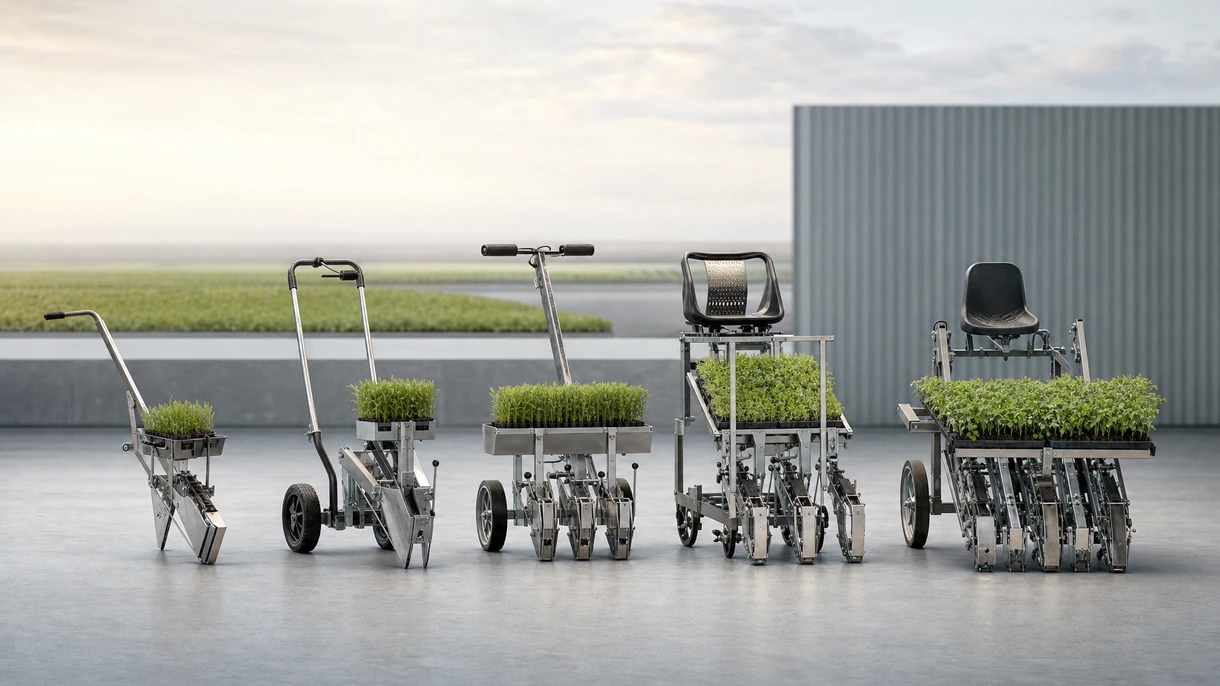
4 Criteria to choose your block transplanter
Hourly planting throughput capacity
High-output machines minimize labor costs and ensure large acreages are planted during narrow, optimal weather windows for crop success.
Seedling block size versatility
Equipment must handle various press-pot sizes to accommodate different crop growth stages and diverse professional vegetable production requirements.
Inter-row spacing adjustment accuracy
Precise alignment is critical for subsequent mechanical weeding passes and maximizing field density without compromising individual plant health.
Root ball structural integrity
The mechanism must deposit blocks gently to prevent fracturing, ensuring rapid root establishment and uniform growth across fields.
Available technologies and advantages
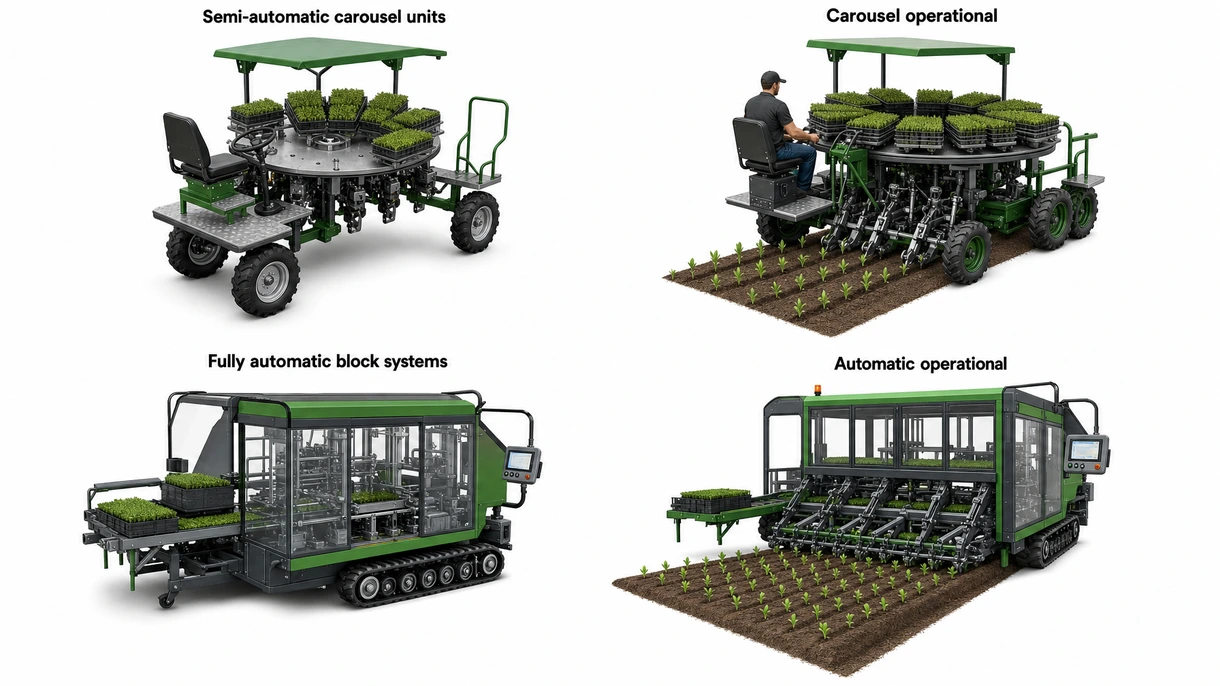
Semi-automatic carousel units
These machines use manual loading into rotating cups, synchronizing planting speed with ground travel to ensure consistent spacing across varying field conditions.
Carousel operational trade-offs
These systems offer high mechanical reliability and lower initial costs, yet they suffer from human speed limitations and significantly higher long-term labor expenses.
Fully automatic block systems
High-speed grippers transfer blocks from trays directly into the furrow, using electronic sensors to maintain precision at velocities exceeding conventional manual loading capacities.
Automatic operational trade-offs
While maximizing throughput and reducing labor requirements, these machines demand perfectly uniform soil blocks and involve complex maintenance protocols and high initial capital expenditure.
6 expert tips
Match machine capacity to greenhouse seedling output to prevent labor bottlenecks during the peak spring planting window.
Select models with stainless steel components to resist corrosion from humid soil and repeated high-pressure cleaning protocols.
Prioritize hydraulic depth control over manual settings to ensure uniform crop maturity and facilitate mechanical harvesting operations.
Evaluate tractor horsepower requirements and hitch compatibility to avoid additional capital expenditure on mismatched power units.
Opt for modular units that allow for future expansion of rows without requiring a complete system replacement.
Always verify the technical certification to ensure compliance with local building safety standards and long-term durability.
Innovations and Trends
*Prices are pre-tax. They exclude delivery charges and customs duties and do not include additional charges for installation or activation options. Prices are indicative only and may vary by country, with changes to the cost of raw materials and exchange rates.
About AgriExpo
AgriExpo is a marketplace that offers B2B players a complete experience, from product sourcing to purchase. AgriExpo is an entity of VirtualExpo Group.
Are you a buyer?
Are you a supplier?