
- Home page
- buying guide
- bale loader
bale loader
bale loader: A technical guide
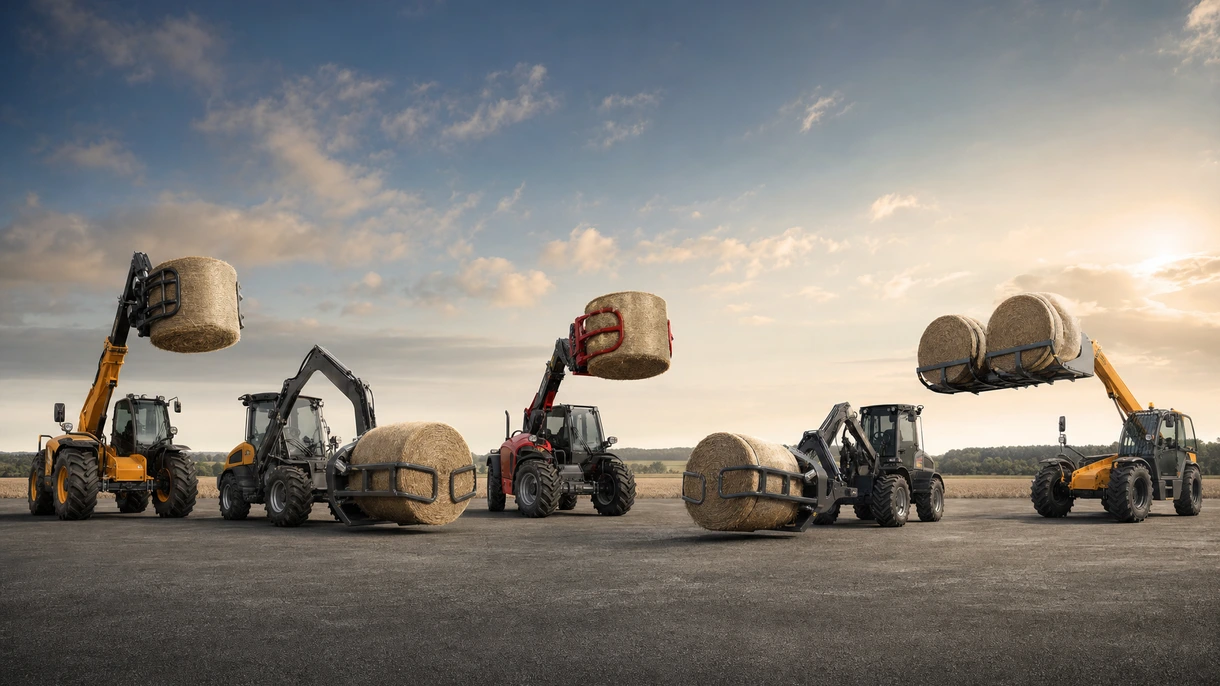
4 Criteria to choose your bale loader
Lifting capacity and reach
Essential for handling high-density square bales or stacked rounds while maintaining loader stability and preventing hydraulic system overheating.
Attachment mounting compatibility
Standardized interfaces like Euro or skid steer mounts ensure seamless integration across diverse tractor fleets and multiple telehandler models.
Structural cycle durability
Heavy-duty steel frames must withstand high-frequency vibrations and torsional stress during intensive harvest periods and demanding transport operations.
Hydraulic flow requirement
Matching valve sensitivity with tractor pump output determines cycle speeds and the precision of bale placement in high-density stacks.
Available technologies and advantages
Trailed Automatic Bale Collectors
These systems automate field clearance by picking up and stacking bales on integrated trailers using sophisticated hydraulic arm mechanisms and electronic sensors. Advantages include exceptional operational speed and reduced labor requirements, though high purchase costs and mechanical complexity limit their use to large-scale contractors.
Tractor Mounted Front Loaders
Utilizing the tractor hydraulic system, these loaders offer versatility by swapping bale spikes for grapples or squeeze tools across various agricultural brands. This approach provides cost-effective multi-functional utility for mixed farms, yet it risks front-axle fatigue and lacks the reach of dedicated telehandlers.
Skid Steer Bale Handlers
Compact and highly maneuverable units designed for tight barn spaces and indoor stacking where large tractors cannot operate safely or efficiently. Excellent agility facilitates superior performance in confined environments, but limited lift height and capacity restrict usage to smaller round or square bales.

6 expert tips
Prioritize loaders with self-leveling linkages to maintain bale orientation and prevent accidental drops during high-altitude stacking maneuvers.
Evaluate the total cost of ownership by factoring in wear-resistant bushings and greaseable pivot points for long-term reliability.
Select heavy-duty forged tines over hollow tubes to ensure structural integrity when handling moisture-heavy silage or fermented hay.
Verify hydraulic circuit compatibility to ensure the tractor oil flow matches the loader requirements for smooth simultaneous operations.
Invest in visibility-optimized frame designs to reduce operator fatigue and minimize potential damage to expensive storage shed structures.
Always verify the technical certification to ensure compliance with local building safety standards and long-term durability.
Innovations and Trends
Provide real-time moisture and mass data for precise inventory management and nutritional tracking during loading.
Offer millimeter precision for stacking high-density square bales in confined storage or transport trailers.
Allow operators to switch implements without exiting the cab, increasing safety and operational efficiency.
Reduce deadweight, allowing for increased bale payloads without exceeding tractor front-axle load limits.
*Prices are pre-tax. They exclude delivery charges and customs duties and do not include additional charges for installation or activation options. Prices are indicative only and may vary by country, with changes to the cost of raw materials and exchange rates.
About AgriExpo
AgriExpo is a marketplace that offers B2B players a complete experience, from product sourcing to purchase. AgriExpo is an entity of VirtualExpo Group.
Are you a buyer?
Are you a supplier?