
- Home page
- buying guide
- weather station
weather station
weather station: A technical guide
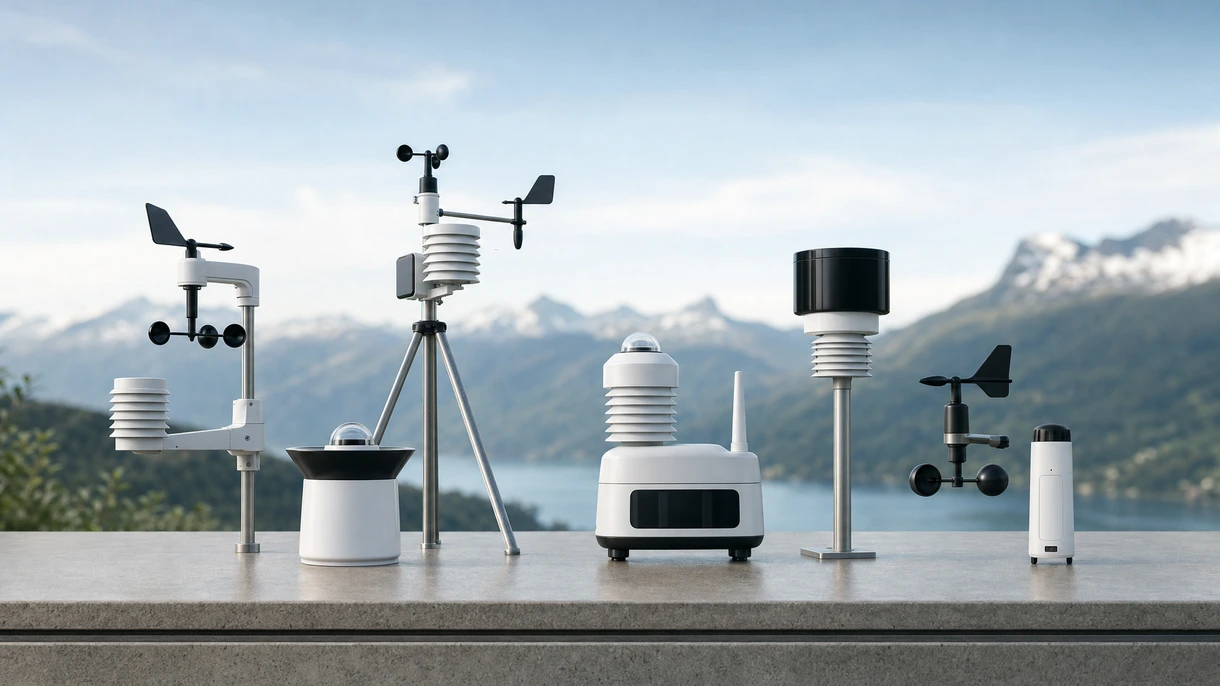
4 Criteria to choose your weather station
Sensor precision and calibration
High-grade sensors ensure accurate evapotranspiration calculations which are essential for optimizing irrigation schedules and preventing costly water resource waste.
Data connectivity and integration
Seamless API integration with existing farm management software allows automated irrigation control and localized disease forecasting based on real-time data.
Power autonomy and durability
Solar-powered systems with robust IP-rated housings ensure continuous operation in harsh field conditions without requiring frequent manual battery maintenance.
Modular design and maintenance
Modular components allow for quick field repairs and sensor upgrades without replacing the entire station, minimizing long-term total ownership costs.
Available technologies and advantages
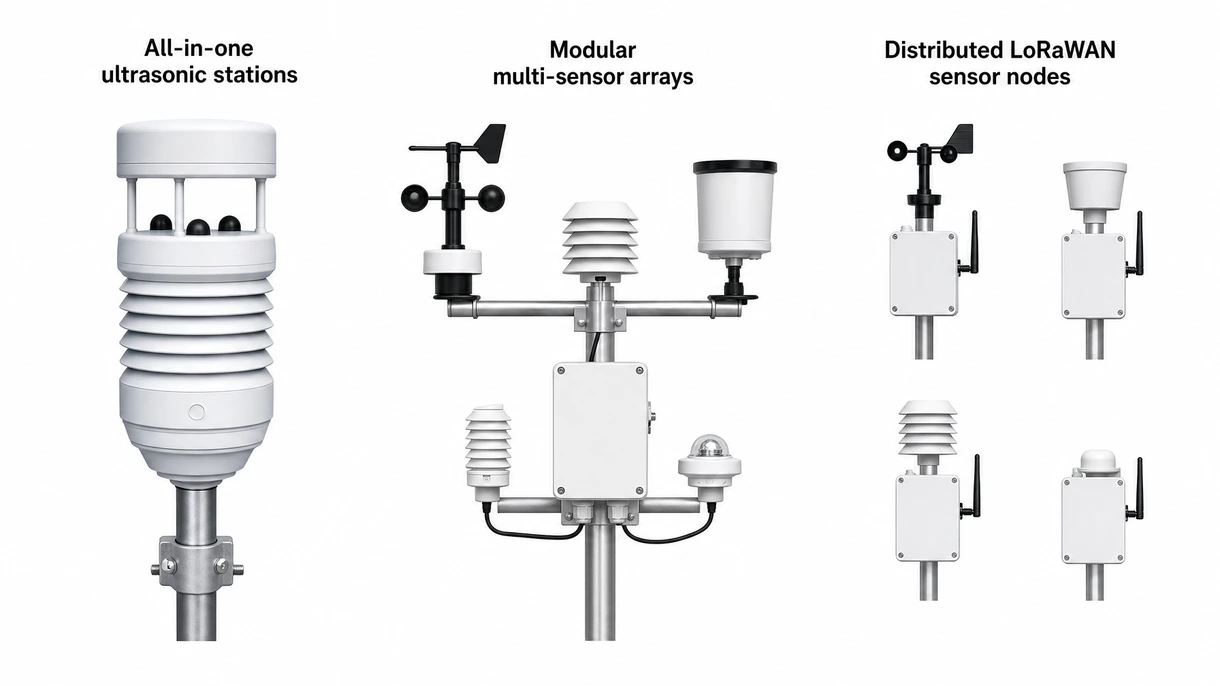
All-in-one ultrasonic stations
These systems utilize ultrasonic transducers for wind measurement and solid-state sensors for precipitation, eliminating mechanical wear common in legacy equipment.
Performance and trade-offs
These provide extreme durability and high accuracy but involve higher initial costs and limited repairability if internal modules fail during peak season.
Modular multi-sensor arrays
Traditional arrays combine individual high-precision sensors linked to a central logger, offering granular customization for specific crop canopy heights across various field locations.
Performance and trade-offs
They allow for easy sensor replacement and high flexibility yet require complex wiring and frequent calibration of moving parts like anemometer cups.
Distributed LoRaWAN sensor nodes
Low-power wide-area networks connect multiple micro-weather nodes to a single gateway, providing high-density field data across expansive farm territories without cellular costs.
Performance and trade-offs
This family offers cost-effective microclimate mapping but faces data latency issues and bandwidth limitations for high-frequency sensor reporting in large operations.
6 expert tips
Prioritize stations with open API architectures to ensure seamless data flow between weather sensors and automated irrigation control systems.
Select ultrasonic wind sensors to reduce maintenance costs associated with moving parts in dusty or high-wind agricultural environments.
Always verify the technical certification to ensure compliance with local building safety standards and long-term durability.
Validate cellular signal strength or LoRaWAN gateway range across your specific topography before committing to a large-scale hardware deployment.
Opt for multi-year data subscription packages during the initial purchase to lock in lower operational costs for agronomic forecasting.
Choose systems offering integrated leaf wetness sensors for more accurate predictive modeling of fungal diseases in high-value specialty crops.
Innovations and Trends
Utilizes ground-truth sensor data to provide site-specific microclimate predictions for precise chemical application and harvesting windows.
Combines physical station readings with orbital imagery to create comprehensive field-level moisture maps across unmonitored farm zones.
Enable real-time frost alerts and automated valve closures directly at the station without relying on cloud server connectivity.
Combined with ultra-low power chips eliminate the need for battery replacements throughout the entire sensor lifecycle.
*Prices are pre-tax. They exclude delivery charges and customs duties and do not include additional charges for installation or activation options. Prices are indicative only and may vary by country, with changes to the cost of raw materials and exchange rates.
About AgriExpo
AgriExpo is a marketplace that offers B2B players a complete experience, from product sourcing to purchase. AgriExpo is an entity of VirtualExpo Group.
Are you a buyer?
Are you a supplier?