
- Home page
- buying guide
- rotary tiller
rotary tiller
rotary tiller: A technical guide
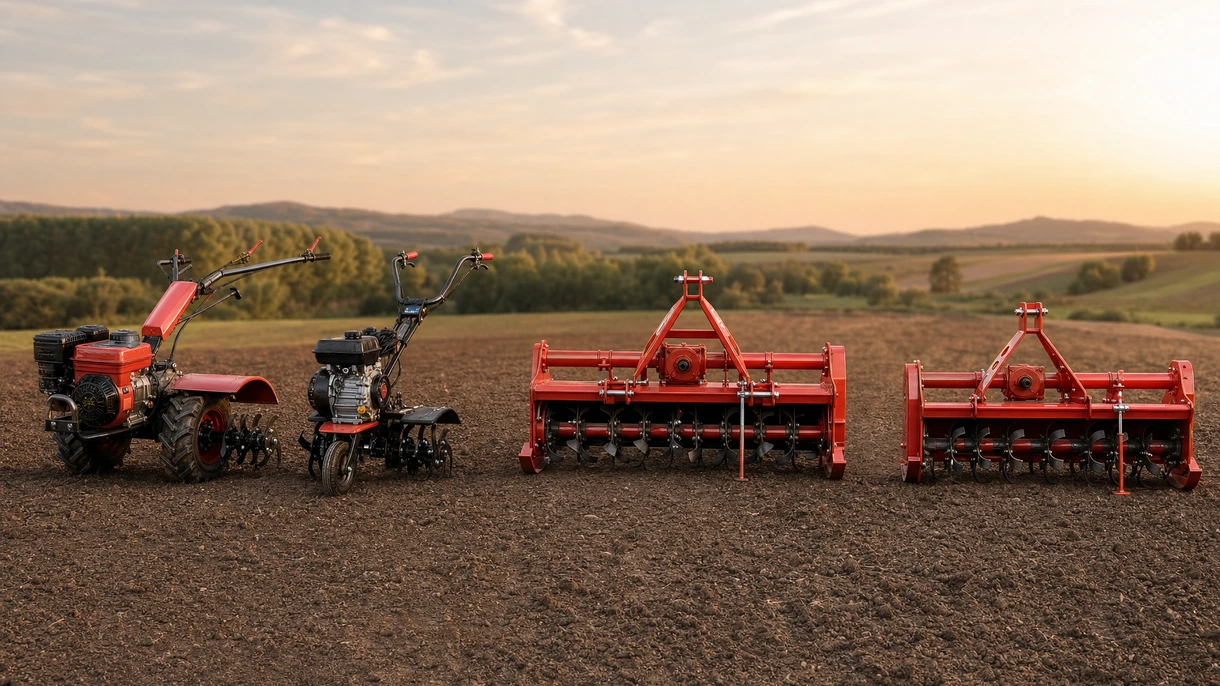
4 Criteria to choose your rotary tiller
Horsepower to width ratio.
Ensures tractor PTO efficiency and prevents transmission overload during primary tillage in heavy clay or compacted soil conditions.
Gearbox torque capacity.
Determines longevity under continuous high-load operations and ability to withstand sudden impact with buried rocks or thick roots.
Rotor blade geometry.
Optimizes soil inversion and residue incorporation while minimizing fuel consumption and drag through various soil moisture levels.
Sealing and bearing protection.
Critical for preventing soil ingress into moving parts, reducing maintenance frequency and preventing premature failure in abrasive environments.
Available technologies and advantages
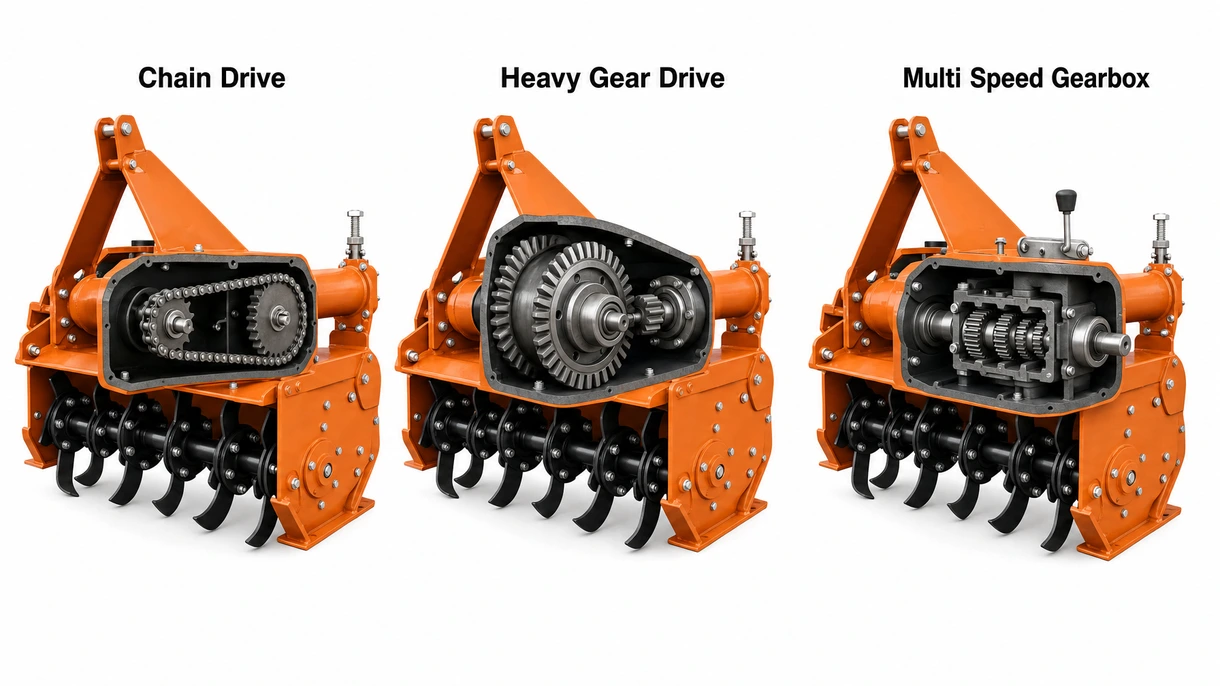
Standard Chain Drive Comparison.
Utilizes lateral chain systems for power transfer to the rotor. This design is optimized for lighter soil types and intermittent horticultural applications requiring flexible power transmission.
Standard Chain Drive Dynamics.
Advantages include lower acquisition costs and simplified field maintenance, though limitations involve frequent chain stretching and reduced power transfer efficiency compared to gear-driven options.
Heavy Gear Drive Comparison.
Employs oil-bath side gears for maximum power transmission efficiency. This system is specifically engineered for intensive commercial farming and integration with high-horsepower tractor platforms.
Heavy Gear Drive Dynamics.
Superior torque capacity and extreme durability are primary advantages, yet these units involve higher initial investment costs and increased weight for tractor linkage systems.
Multi Speed Gearbox Comparison.
Features adjustable gear ratios to control rotor speed independently of tractor ground speed. This technology is essential for achieving precise seedbed preparation across diverse soil textures.
Multi Speed Gearbox Dynamics.
Enhanced control over tilth quality provides significant agronomic advantages, while the increased mechanical complexity requires more sophisticated operator training and higher long-term maintenance budgets.
6 expert tips
Match the tiller working width precisely to the tractor outer tire track to ensure complete coverage and eliminate compaction.
Prioritize models with adjustable rear tailboards to control soil refinement levels and achieve specific agronomic seedbed density requirements.
Select slip clutch driveline protection over shear bolts to minimize downtime during intensive operations in stony or variable terrain.
Calculate the total cost of ownership by evaluating the availability and replacement price of high-wear boron steel tilling blades.
Opt for side-shift capabilities in orchard or vineyard settings to allow for close-up cultivation near sensitive permanent crop rows.
Always verify the technical certification to ensure compliance with local building safety standards and long-term durability.
Innovations and Trends
Eliminates mechanical PTO constraints allowing real-time rotor speed adjustments to match varying soil densities and moisture levels.
Enables automated tillage depth management from the cab ensuring consistent seedbed preparation across heterogeneous field topographical profiles.
Extends component lifespan triple the standard duration in abrasive sandy soils significantly reducing seasonal maintenance and operational downtime.
Monitors aggregate size in real-time to adjust tractor speed preventing over-tilling and preserving vital soil organic structure.
*Prices are pre-tax. They exclude delivery charges and customs duties and do not include additional charges for installation or activation options. Prices are indicative only and may vary by country, with changes to the cost of raw materials and exchange rates.
About AgriExpo
AgriExpo is a marketplace that offers B2B players a complete experience, from product sourcing to purchase. AgriExpo is an entity of VirtualExpo Group.
Are you a buyer?
Are you a supplier?