
- Home page
- buying guide
- self-propelled mixing wagon
self-propelled mixing wagon
self-propelled mixing wagon: A technical guide
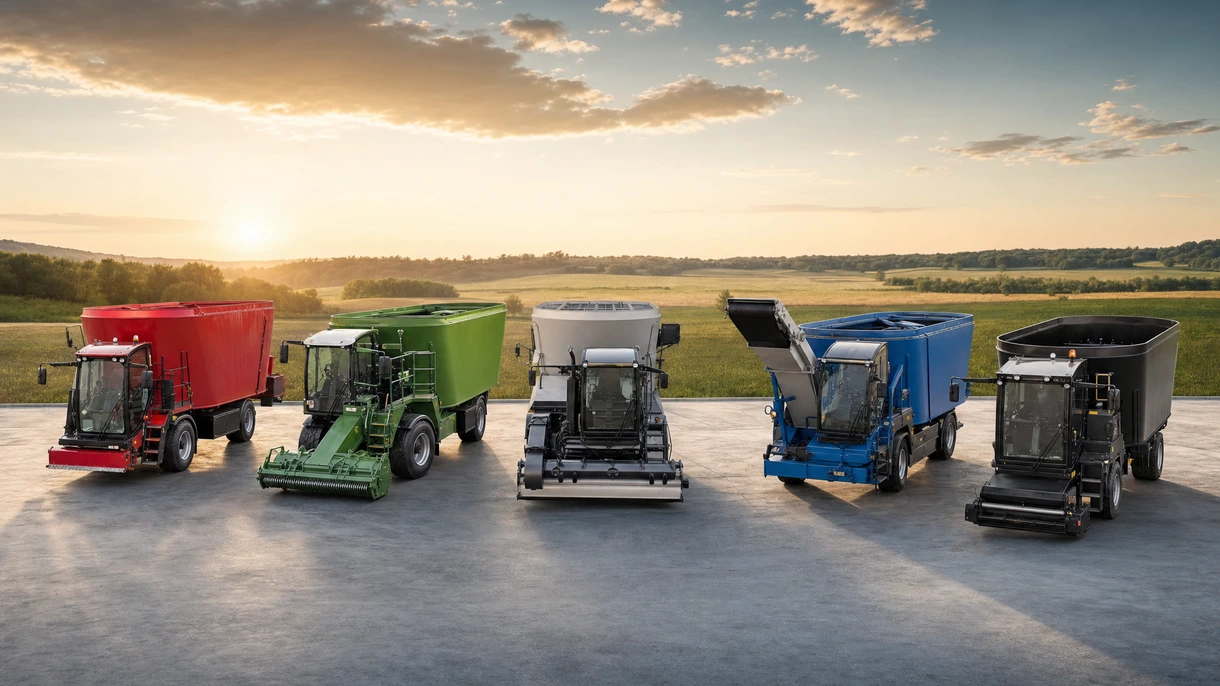
4 Criteria to choose your self-propelled mixing wagon
Loading speed and capacity
Determines herd throughput efficiency and total feeding time required to meet nutritional deadlines across multiple barns or locations.
Mixing quality and consistency
Ensures uniform distribution of total mixed rations preventing sorting behavior by cattle while maintaining high dry matter intake levels.
Maneuverability and chassis design
Essential for navigating tight European barns or narrow American feed bunks without compromising structural integrity or cycle times.
Engine and fuel efficiency
Direct impact on operational margins through lower hourly fuel consumption and reduced maintenance costs over the equipment lifespan.
Available technologies and advantages
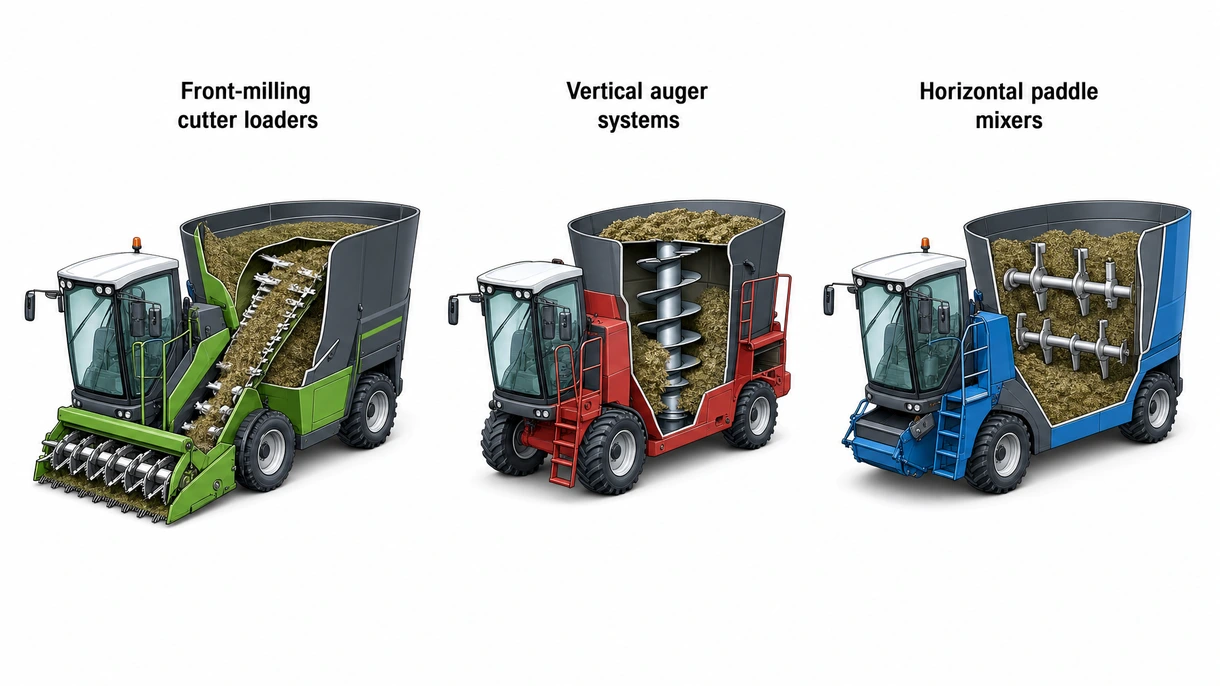
Front-milling cutter loaders
Front-milling systems utilize a high-performance rotating drum to harvest silage with clean cut faces preserving feed quality and structure. These systems minimize nutritional loss but require precise operator skill to prevent forage structure damage during the aggressive loading process.
Vertical auger systems
Single or twin vertical augers provide superior mixing for long-fiber diets and heavy bales common in dry hay regions. This technology is excellent at processing whole bales but consumes more vertical space making them less suitable for low-clearance buildings.
Horizontal paddle mixers
These systems utilize rotating shafts with paddles to provide a gentle mixing action that preserves the integrity of delicate components. This design is optimal for specific protein-heavy rations though they generally offer slower discharge speeds compared to vertical screw alternatives.
6 expert tips
Prioritize machines with high-grade stainless steel liners in the mixing tub to extend service life and reduce friction costs.
Evaluate the loading cutter speed against your specific forage density to ensure maximum intake without damaging the fiber structure.
Verify the availability of local specialized technician support to minimize downtime during critical feeding windows for large dairy herds.
Analyze the cabin visibility and ergonomic controls to reduce operator fatigue during intensive daily feeding cycles across multiple barns.
Choose a drivetrain configuration that matches your yard terrain to ensure stability when the mixing tub is fully loaded.
Always verify the technical certification to ensure compliance with local building safety standards and long-term durability.
Innovations and Trends
Real-time nutrient analysis allows for automatic ration adjustment by measuring dry matter during the loading phase for consistency.
Transitioning mixing units to electric power reduces diesel consumption and noise levels within enclosed buildings for animal welfare.
Remote data integration allows managers to monitor fuel efficiency and ration accuracy via cloud-based farm management software platforms.
Advanced emission engines meet strict European regulatory requirements while improving thermal efficiency and reducing the farm carbon footprint.
*Prices are pre-tax. They exclude delivery charges and customs duties and do not include additional charges for installation or activation options. Prices are indicative only and may vary by country, with changes to the cost of raw materials and exchange rates.
About AgriExpo
AgriExpo is a marketplace that offers B2B players a complete experience, from product sourcing to purchase. AgriExpo is an entity of VirtualExpo Group.
Are you a buyer?
Are you a supplier?