
- Home page
- buying guide
- mulcher
mulcher
mulcher: A technical guide
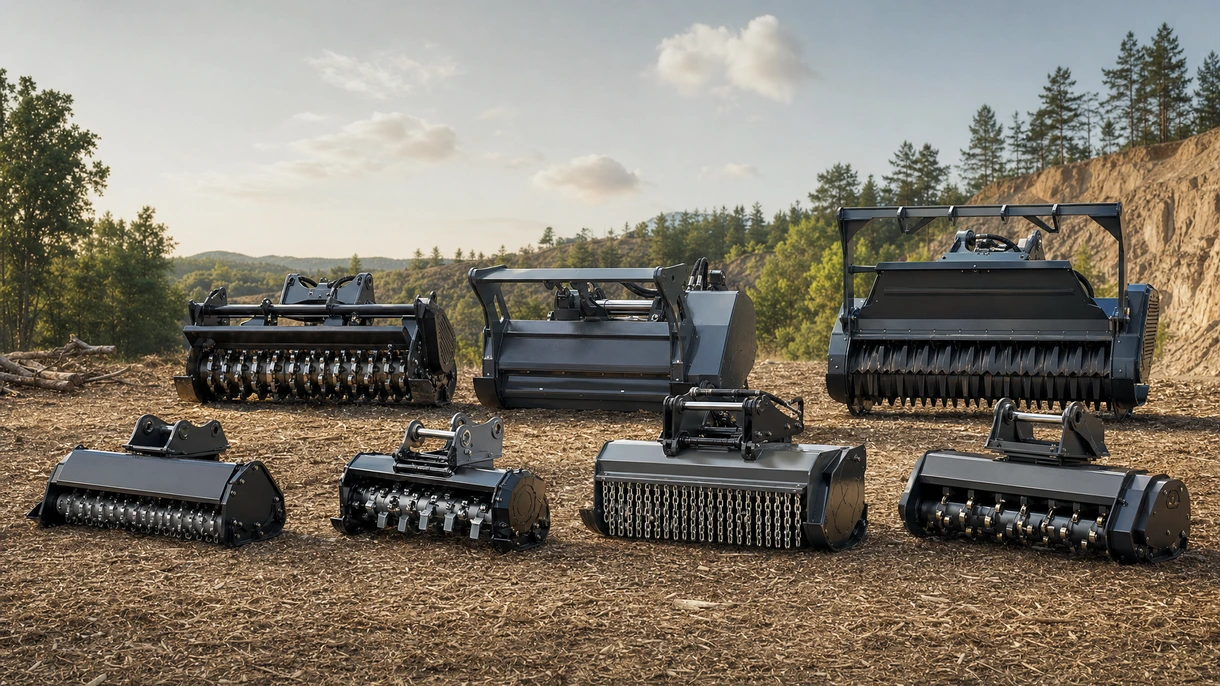
4 Criteria to choose your mulcher
Rotor diameter speed
Large diameters increase tip speed and kinetic energy, ensuring clean cuts of dense residue and preventing rotor clogging issues.
Transmission power rating
Gearbox and belt drive capacities must exceed tractor output to handle peak torque loads during heavy material intake cycles.
Blade configuration type
Selecting hammer types or fixed teeth determines finish quality and the machine's ability to handle woody vegetation or stones.
Chassis build thickness
Heavy steel plates and internal liners prevent structural deformation from high velocity debris impact during intensive field or forest operations.
Available technologies and advantages
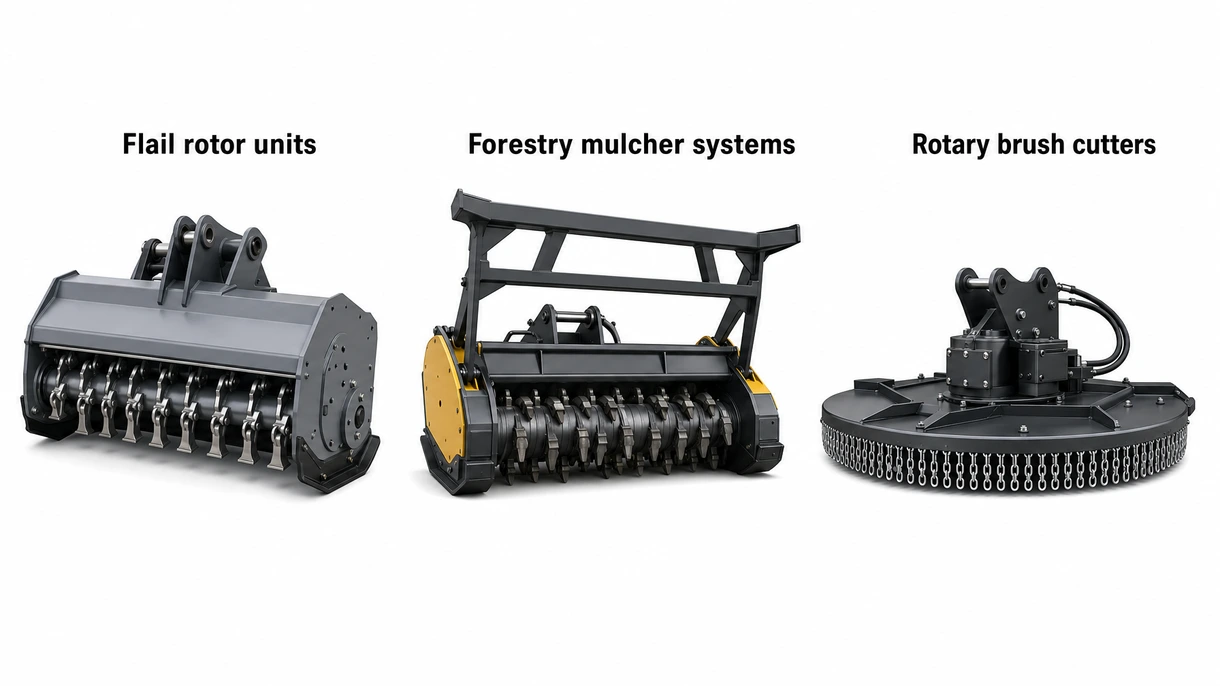
Flail rotor units
Horizontal rotors with swinging blades provide high versatility for grass and light crop residue, ensuring uniform distribution across the field. High residue sizing quality is balanced against increased maintenance requirements due to numerous pivot points and sensitivity to large rocks.
Forestry mulcher systems
Fixed carbide teeth on heavy-duty rotors grind standing timber into fine mulch, utilizing high hydraulic flow or mechanical drive power. High productivity in land clearing is offset by significant fuel consumption and the requirement for specialized high-flow carrier vehicles.
Rotary brush cutters
Horizontal spinning blades use centrifugal force to clear pasture and light scrub, operating effectively at higher speeds than flail systems. Lower procurement costs and simplified maintenance are balanced against uneven material distribution and increased safety risks from ejected debris.
6 expert tips
Prioritize machines with interchangeable bolt-on wear liners to extend the main frame service life under high-abrasion soil conditions.
Match the rotor speed and blade geometry specifically to the maximum expected diameter of woody or herbaceous residues.
Evaluate hydraulic cooling capacity on the carrier vehicle to ensure continuous operation during high-temperature European or American summers.
Select models featuring double-skinned frames to prevent external chassis damage and maintain structural integrity during accidental object impacts.
Invest in automatic belt tensioning systems to reduce manual maintenance intervals and prevent slippage during high-torque mulching tasks.
Always verify the technical certification to ensure compliance with local building safety standards and long-term durability.
Innovations and Trends
Provide real-time imbalance alerts to prevent catastrophic bearing failure and reduce unplanned machinery downtime during operations.
Improve operator safety on steep slopes while minimizing soil compaction in sensitive agricultural or ecological zones.
Maintain cutting sharpness longer, significantly reducing fuel consumption and blade sharpening frequency during intensive use.
Optimize torque delivery based on material density, improving overall energy efficiency across diverse vegetation types.
*Prices are pre-tax. They exclude delivery charges and customs duties and do not include additional charges for installation or activation options. Prices are indicative only and may vary by country, with changes to the cost of raw materials and exchange rates.
About AgriExpo
AgriExpo is a marketplace that offers B2B players a complete experience, from product sourcing to purchase. AgriExpo is an entity of VirtualExpo Group.
Are you a buyer?
Are you a supplier?