
- Home page
- buying guide
- milking cluster
milking cluster
milking cluster: A technical guide
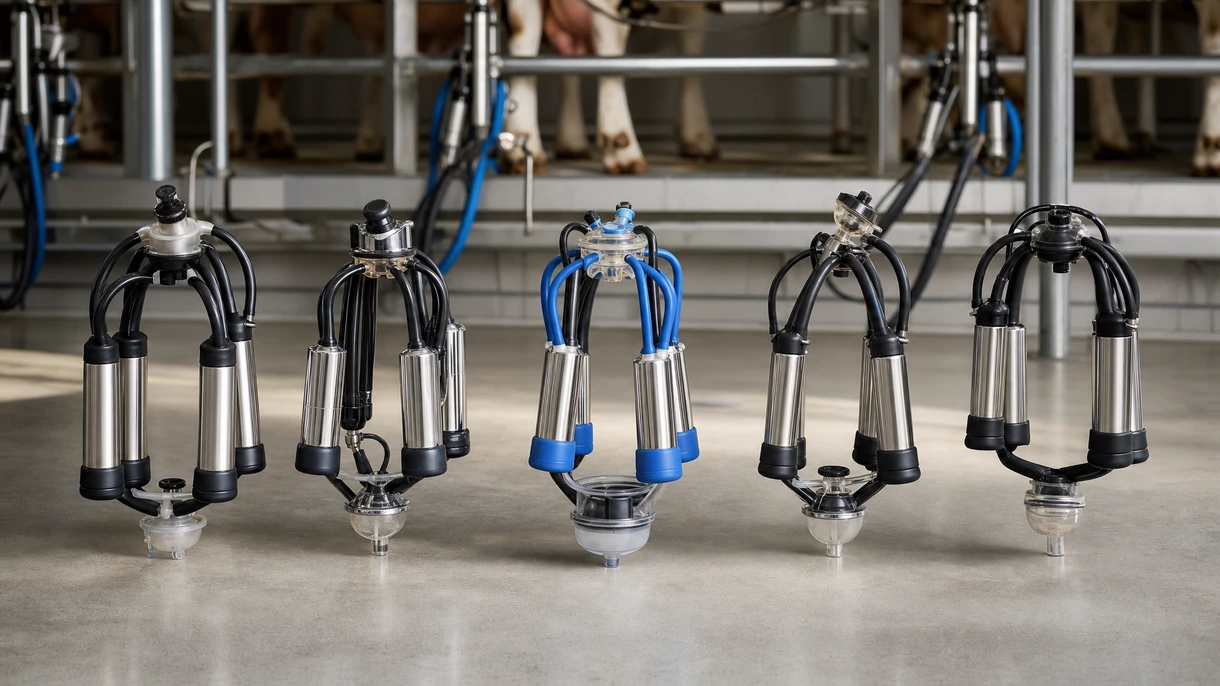
4 Criteria to choose your milking cluster
Vacuum stability levels
Vacuum stability determines udder health and milk flow rates, minimizing teat-end congestion and hyperkeratosis during high-flow milking phases.
Cluster weight distribution
Optimal balance ensures even milk-out across all quarters, preventing premature unit kick-off and reducing manual operator intervention requirements.
Liner slip frequency
Minimizing air ingress prevents bacterial back-spray into the udder, significantly reducing somatic cell counts and clinical mastitis incidence.
Material durability standards
High-grade stainless steel and food-grade polymers ensure long-term resistance to aggressive cleaning chemicals and daily mechanical wear.
Available technologies and advantages
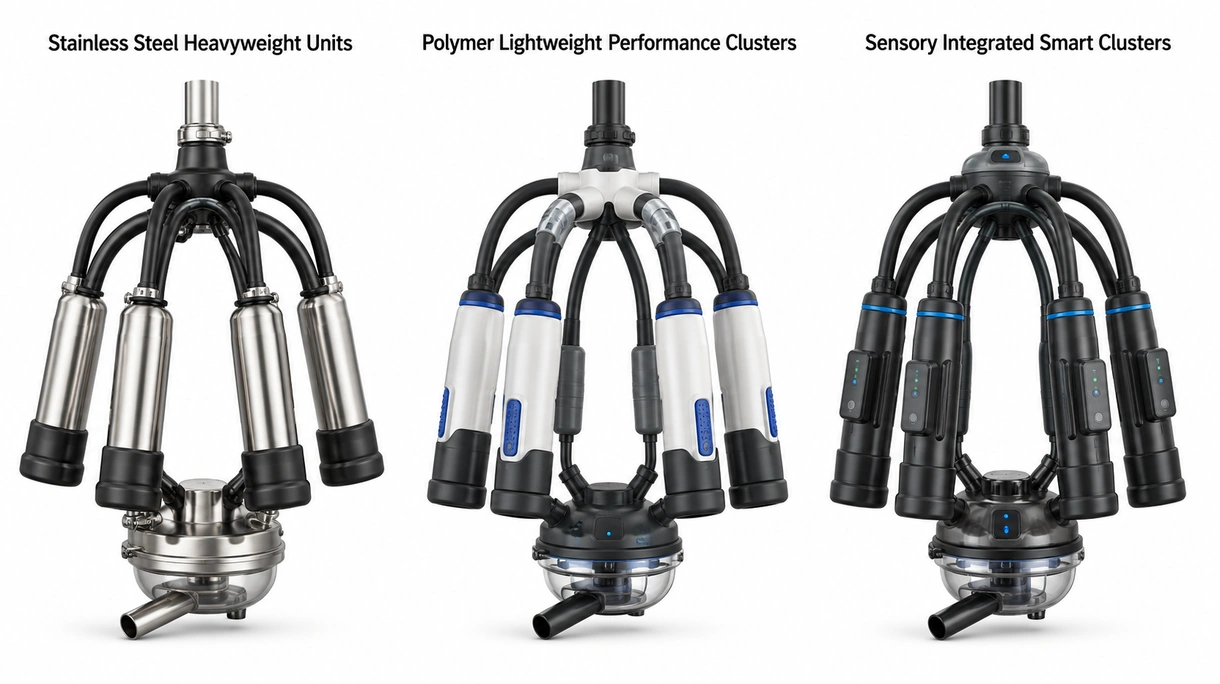
Stainless Steel Heavyweight Units
Heavyweight units provide superior vacuum stability compared to plastic alternatives. They ensure consistent teat placement but increase physical strain on operators during long shifts in large-scale dairy parlors.
Heavyweight Unit Evaluation
These units maximize milk-out efficiency and durability while causing significant operator fatigue. The trade-off involves prioritizing cow throughput over human labor comfort in high-intensity dairy operations.
Polymer Lightweight Performance Clusters
Lightweight clusters prioritize operator ergonomics over the natural stability provided by steel. They require integrated weights to achieve the same milk-out performance as traditional heavy metal assemblies.
Lightweight Cluster Evaluation
Ergonomic benefits reduce labor turnover and injury risks. Conversely, vacuum instability is more frequent. Managers must balance lower worker strain against the potential for increased manual adjustments.
Sensory Integrated Smart Clusters
Integrated sensors provide immediate data compared to standard non-electronic clusters. They automate health monitoring at the source but increase complexity and maintenance requirements within the parlor environment.
Smart Cluster Evaluation
These systems detect subclinical mastitis early, protecting herd health. Yet, high capital costs and technical failure risks remain. The trade-off is higher data precision versus increased infrastructure investment.
6 expert tips
Implement clusters featuring high-capacity claw volumes to handle peak flow rates from high-yielding cows without causing vacuum fluctuations.
Match cluster weight precisely to your specific breed physiology to ensure complete milk-out and prevent teat tissue damage.
Always verify the technical certification to ensure compliance with local building safety standards and long-term durability.
Prioritize clusters with transparent claw bowls to allow immediate visual monitoring of milk flow and potential health issues.
Select liners with a documented life cycle of twenty-five hundred milkings to maintain consistent pulsation and udder health.
Standardize cluster components across the entire parlor to simplify maintenance schedules and reduce spare part inventory carrying costs.
Innovations and Trends
Silicone liner technology improves teat tissue health and extends service life by three times compared to traditional rubber.
Individual quarter pulsation systems adjust vacuum levels based on real-time milk flow to maximize speed while protecting udders.
Smart sensors integrated into the claw provide immediate electrical conductivity data to detect subclinical mastitis before visual symptoms.
Carbon fiber reinforced components reduce total unit weight by forty percent, significantly lowering musculoskeletal strain for parlor operators.
*Prices are pre-tax. They exclude delivery charges and customs duties and do not include additional charges for installation or activation options. Prices are indicative only and may vary by country, with changes to the cost of raw materials and exchange rates.
About AgriExpo
AgriExpo is a marketplace that offers B2B players a complete experience, from product sourcing to purchase. AgriExpo is an entity of VirtualExpo Group.
Are you a buyer?
Are you a supplier?